What is a testamentary trust?
A testamentary trust is created by your will and takes effect after you pass. They're one of the most powerful estate planning tools available to Australian families, and despite popular belief, aren't just for very wealthy people or complicated family situations.




What is a testamentary trust?
A testamentary trust is a trust created by your will. It's sometimes called a testamentary discretionary trust, a TDT or simply a TT. They're all the same thing: a trust that sits dormant in your will and only comes into play after you die.
A testamentary trust is established under a valid will that is separate from the deceased estate itself. It works like a family trust. The main difference is that a family trust has its own legal document setting out the rules, called a trust deed. A testamentary trust doesn’t need one, because those rules are written into your will.
A testamentary trust works by separating control of the assets from those who benefit from them. There are three key roles:
- Trustee: the legal owner of the trust assets. The trustee manages the trust day to day and decides how income and assets are distributed.
- Beneficiaries: those who will benefit from the trust. None of them owns the assets outright, and what each receives is at the trustee's discretion.
- Appointor (optional): the ultimate controller, and an optional role, who can sack and replace the trustee at any time.
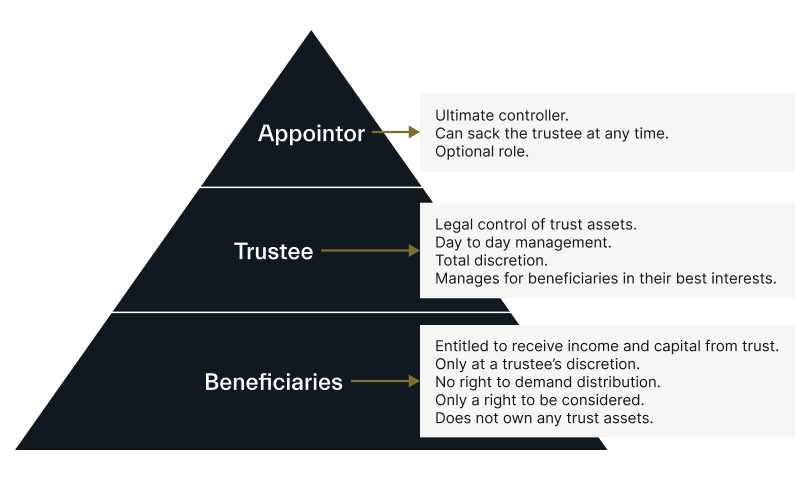
The same person can be both the trustee and a beneficiary. For example, you could make your adult child the trustee of the trust holding their inheritance. They would be in charge of the money and could use it for themselves and their family, just like if you’d left it to them directly. The difference is, legally, the money belongs to the trust rather than to them, and that’s what gives them the tax and asset protection benefits below.
Benefits of a testamentary trust
1. Income tax flexibility
The trust itself usually doesn’t pay tax. The income “flows through” to the people who benefit from it, and they pay the tax instead. Each year, the income earned from investing the inheritance is distributed to beneficiaries, who are taxed at their own marginal rates. Because the trustee chooses who receives that income, it can be directed to family members on lower tax rates.
Testamentary trusts also offer a significant tax benefit for children. Those under 18 who receive income from a testamentary trust are taxed at ordinary adult rates, rather than the penalty rates that usually apply to minors' unearned income. That means each child can receive around $22,000 a year tax free.
2. Asset protection
Because no beneficiary owns the trust assets, an inheritance held in a testamentary trust is harder to reach if your child:
- separates or divorces
- faces creditors through a business or board role
- is exposed to negligence claims in their profession
3. Protecting young or vulnerable beneficiaries
Without a trust, children generally take control of their inheritance at 18. A testamentary trust lets you choose who makes the financial decisions until your children are ready.
4. Flexibility for overseas beneficiaries
If a beneficiary lives overseas, a testamentary trust can give the trustee more options to manage how and when income is distributed, which can help defer or reduce tax.
What it looks like in practice
Example 1: you leave a spouse and three young children.
A Perth parent passes away, leaving their partner and three children under 18. Through a testamentary trust, roughly the first $66,000 a year of income from investing the inheritance could be distributed to the children tax free and used for their living and school costs. Without a trust, the surviving spouse would pay tax on that income at their marginal rate, on top of their salary, and fund those costs from after-tax money.
Example 2: you leave an inheritance to an adult child with kids of their own.
If your child has three children of their own, the same approach applies one generation down. Around $66,000 a year of trust income could flow tax free to your grandchildren's living and education expenses, and those savings can continue generation after generation.
Are there any downsides to a testamentary trust?
A testamentary trust does come with some administration once it's running. A well governed trust needs to lodge a tax return every financial year, keep proper records (trustee resolutions, financial statements and reconciliations) and fully document cost bases and capital gains tax events.
This extra compliance is usually far outweighed by the tax savings. And because the trust only starts when you die, there's nothing to manage or pay for while you're alive. However, there are two things to keep in mind:
- Timing matters: You only get one chance at a testamentary trust. It must be in your will at the time of your death.
- Super sits outside your will: Your super isn't automatically part of your estate. Without a binding death benefit nomination, your super fund's trustee decides who receives it, so it's worth reviewing your nominations alongside your will.
Do I need a testamentary trust?
It's worth considering a testamentary trust in your will if:
- You're leaving at least $500,000 (including super and life insurance) to one or more people.
- You want to leave an inheritance to children or grandchildren under 18.
- You want the inheritance protected if a loved one separates or divorces.
- Someone you’re leaving money to runs a business, is a company director, or works in a job where they could be sued.
- You’re worried a family member may not manage a large sum well.
- You're leaving money to someone who lives overseas.
If you don’t have a will at all, now is the time. If you die without a valid will in Western Australia, probate takes longer and your assets are distributed under the state’s inheritance laws. This can also leave some beneficiaries paying more tax than they needed to.
Talk to a Perth estate planning lawyer
The ATO recommends reviewing your estate plan regularly with your legal, tax and financial advisers, especially as your family circumstances change. If you'd like to know whether a testamentary trust is right for your family, the Forbes Kirby team in Perth can help. Visit our contact page to get in touch with our team, or learn more about our Wills, estate planning and probate services.
This article is general information only and isn't legal or financial advice. Please speak with a qualified lawyer about your circumstances.
Tell us about your situation and we'll point you in the right direction.
Newsletter signup